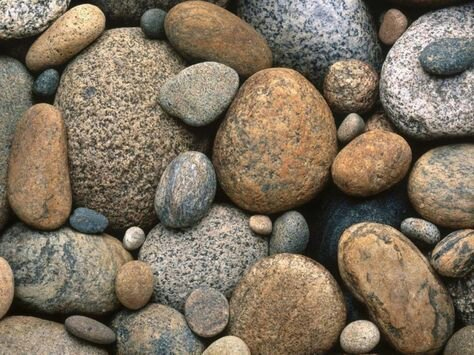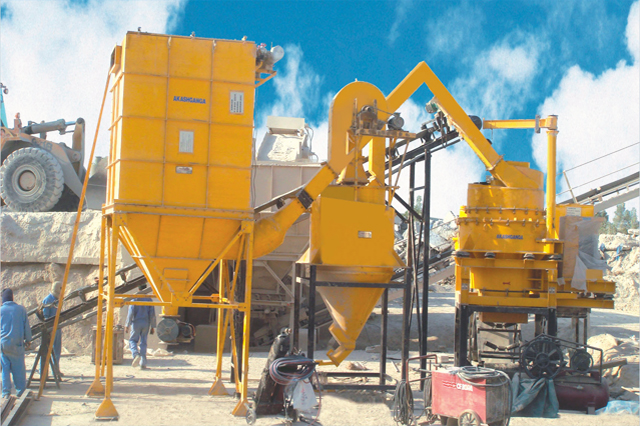


Natural sand are weathered
and worn out particles of rocks and are of various grades or size depending
on the accounting of wearing. The main natural and cheapest resource of sand
is river. Dams are constructed on every river hence these resources are
erasing very fast. Now a days good sand is not readily available, it should
be transported from long distance. Those resources are also exhausting very
rapidly. So it is a need of the time to find some substitute to natural
river sand.
The artificial sand produced by proper machines can be a better substitute
to river sand. The sand should be sharp, clean and course. The grains should
be of durable material. The grain sizes must be such that it should give
minimum voids. The presence of clay and silt retards the setting of the
cement and makes the mortar weaker and the walls or the slab leaks and holds
dampness.
The
sand in the mortar does not add any strength but it is used as an adulterant
for economy and with the same it prevents the shrinkage and cracking of
mortar in setting. The sand must be of proper gradation ( it should have
particles from 150 microns to 4.75 mm in proper proportion) When fine
particles are in proper proportion, the sand will have less voids. The cement
required will be less when there will be less void in sand. Such sand will
be more economical.
Only sand manufactured by V.S.I. Crusher is cubical and angular in shape.
Sand made by other types of machines is flaky , which is troublesome in
working. There is no plasticity in the mortar. Hence the mason are not ready
to work with machine made crushed stone sand. For the same reason inferior
river sand may be used. Manufacturing sand from jaw crusher, cone crusher,
roll crusher often contains high percentage of dust and have flaky particle.
Flaky and angular particles may produce harsh concrete, and may result in
spongy concrete.
There is standard specification for Fine aggregates (Sand). It is divided in
four gradations. Generally known as Zone I, Zone II, Zone III and Zone IV.
There is sieve Designation for each grade. Gradation is made as per the use
of the sand. There are testing sieves for testing the sand. A set of Sieves
with square hole is available. Followings are the sieves
- 4.75 mm,2.365,1.1830,600 microns,300 microns,150 microns
- pan
Specific percentage are designated for each size
for each Zone sand in terms of material retained
or passed `from the sieves.
• Zone One Sand :
Sieve size |
Percentage retained |
Percentage passing |
4.750 |
10 % |
90-100 % |
2.365 |
40 % |
60-95 % |
1.1830 |
70 % |
30-70 % |
600 microns |
66-85 % |
15-34 % |
| 300 microns |
80-90 % |
5-20 % |
| 150 microns |
90-100 % |
0-10 % |
• Zone Two Sand :
Sieve size |
Percentage retained |
Percentage passing |
4.750 |
10 % |
90-100 % |
2.360 |
25 % |
75-100% |
1.1830 |
45 % |
55-90 % |
600 microns |
41-65 % |
35-59 % |
300 microns |
70-92 % |
8-30 % |
150 microns |
90-100 % |
0-10 % |
Where concrete of high strength and good
durability is required Sand used should be of
proper gradation. The concrete mix design should
be done properly. When the sand of finer grade is
used, the ratio of finer to coarse aggregates
should be reduced. The fine to coarse ratio
depends upon the particle shape, surface texture
of both fine and coarse particles. The gradation
of coarse and fine aggregate is very important.
Very fine sand is not recommended for concrete
purpose.
The fines content in the sand below 600 microns
should be about 30 to 50 %. This will be a ideal
sand for concrete work as well as masonry and
plaster work.
At present it is generally observed that the fine
content in river sand below 600 microns are very less.
Such sand should not be used for concreting work.
Our Rotopactor Produces perfect sand of required
gradation. Sand of any Zone can be produced. Sand
from our Rotopactor is a perfect substitute for river sand. |